The luxury hotel market is one of the most competitive in the world. The difference between a hotel that appears in Condé Nast Traveler and one that remains invisible to high-net-worth travellers is not always in the quality of the product — it is in the communications strategy. This is what we have learned at ABM Consultores over two decades of positioning boutique hotels in the world's most selective media.
The Problem of Invisibility in Luxury
There is a common paradox in the luxury hotel sector: exceptional properties offering genuinely extraordinary experiences remain practically unknown to the highest-spending international travellers, while hotels of objectively inferior quality dominate the attention of the most influential publications in the sector. The reason is almost never the product. The reason is always the communications strategy.
At ABM Consultores we have spent over two decades working with boutique hotels across the Mediterranean, and we have clearly identified the pattern that separates hotels that achieve coverage in Condé Nast Traveler, Vanity Fair, Tatler or Wallpaper from those that do not. It is not the number of stars. It is not the room rate. It is the story they know how to tell and, above all, the ability to make the right journalists tell it for them.
The Strategy: From Product to Narrative
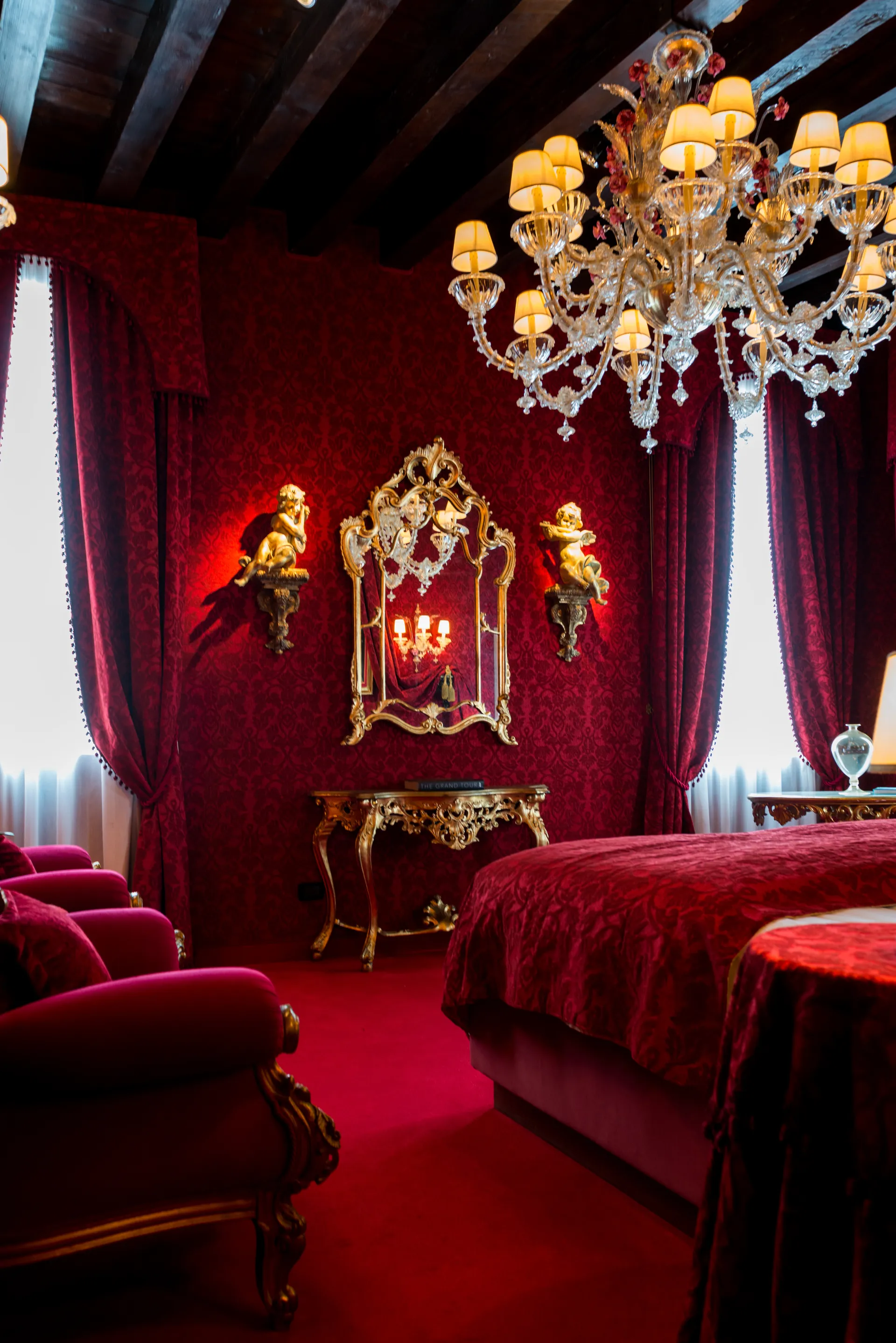
The first step in positioning a boutique hotel in luxury media is identifying what makes that property unique in an absolute sense — not relatively unique, but absolutely unique. In the case of Ca' Maria Adele, the Venetian hotel we represent, that uniqueness lies in the combination of its location facing the Basilica della Salute, its six-century history as a private palazzo and the design philosophy of the Campa brothers, who blend Venetian Gothic with contemporary luxury in a way that no other hotel in Venice replicates. That is the story. The challenge is turning it into a headline.
The narrative of a luxury boutique hotel must operate on three simultaneous levels. The first level is emotional: what does the guest feel that they cannot feel anywhere else in the world. The second level is experiential: what does the hotel do that no other hotel does, what are its own rituals, its secret spaces, its unique moments. The third level is cultural: how does the hotel dialogue with the place where it is located, what does it contribute to an understanding of that destination, why is staying there also an act of connection with local history and culture.
Media Relations: The Long Term as Strategy
One of the greatest differences between luxury PR and conventional PR is temporality. In luxury, media relationships are built over years, not weeks. A journalist from Condé Nast Traveler is not going to write about your hotel because you sent them a well-written press release. They will write about it because they trust whoever recommends it, because they have had a direct experience that has genuinely surprised them, because the story fits perfectly with what their publication needs at that moment and because there is a relationship of trust accumulated over years of honest, high-quality interactions.
Press trips for luxury boutique hotels are one of the most powerful instruments of hotel PR, but also the easiest to get wrong. A well-designed press trip is not taking a group of journalists to a hotel and showing them the rooms. It is creating a personalised, intimate and authentic experience that allows the journalist to understand first-hand why that hotel is different. At ABM Consultores we design each press trip as if it were an event in itself: with a narrative arc, with carefully calculated moments of surprise, with access to experiences that the regular guest does not have.
The Ca' Maria Adele Case: From Palazzo to International Benchmark
Ca' Maria Adele is perhaps the most illustrative case of our track record in hotel positioning. When we started working with the Campa brothers, the hotel was known and appreciated in certain circles, but its international visibility was limited. The strategy we designed was based on three pillars: first, the narrative of the owners as custodians of a six-century Venetian history; second, collaboration with fashion and lifestyle photographers to create images that captured the essence of the hotel in a way that standard hotel photography could not achieve; and third, the organisation of immersive stays for journalists from the target publications.
The result, after two years of systematic work, was the hotel's appearance in Condé Nast Traveler, Vanity Fair España, Semana and several leading international publications. But beyond the titles, what changed was the hotel's perception in the market: it went from being a very good Venetian boutique hotel to being considered one of the most singular accommodation experiences in Europe. That leap is not made by the product alone. It is made by the combination of an exceptional product and a communications strategy that knows how to translate that exceptionality into a language that resonates with the readers of the world's most selective media.
Share article
Related Articles
ABM Consultores
Let's talk about your project
We have been creating unforgettable experiences for over two decades. Tell us your vision.
Get in touch